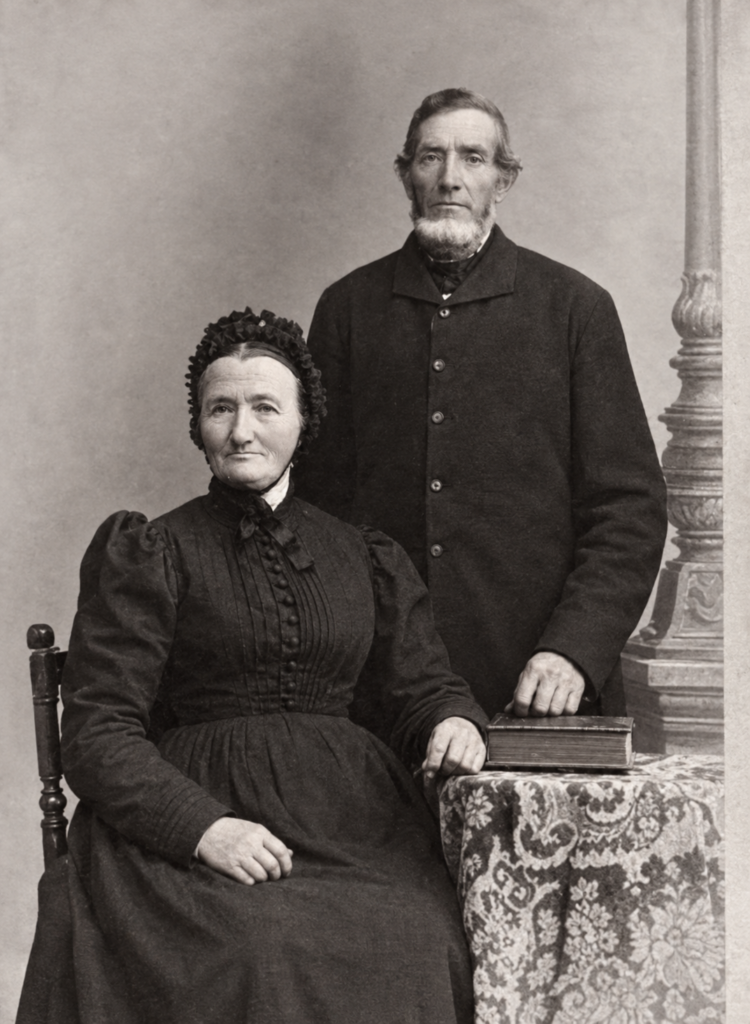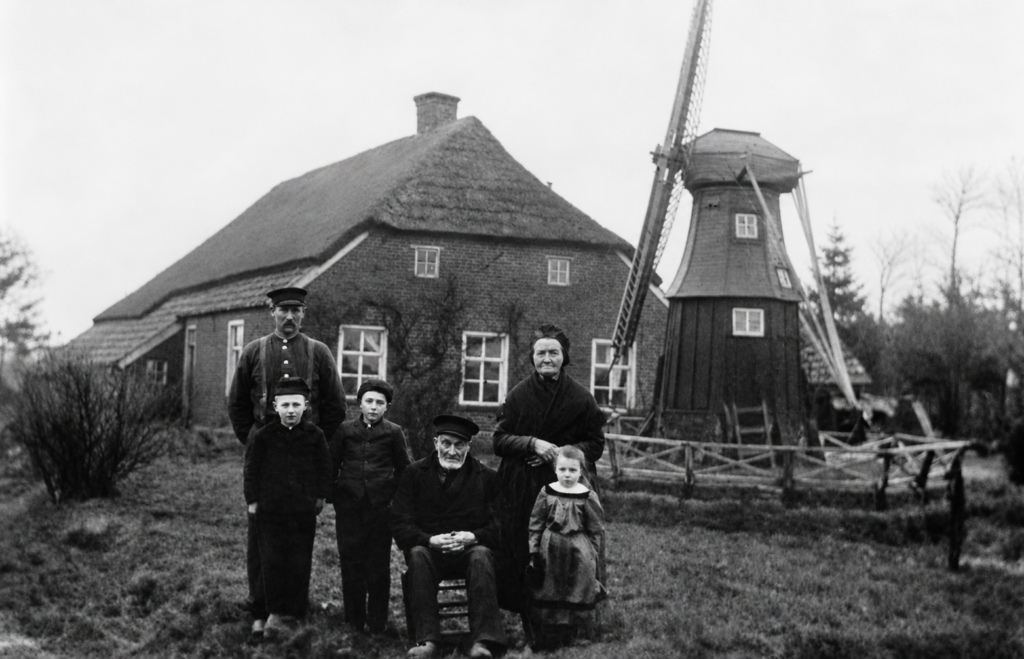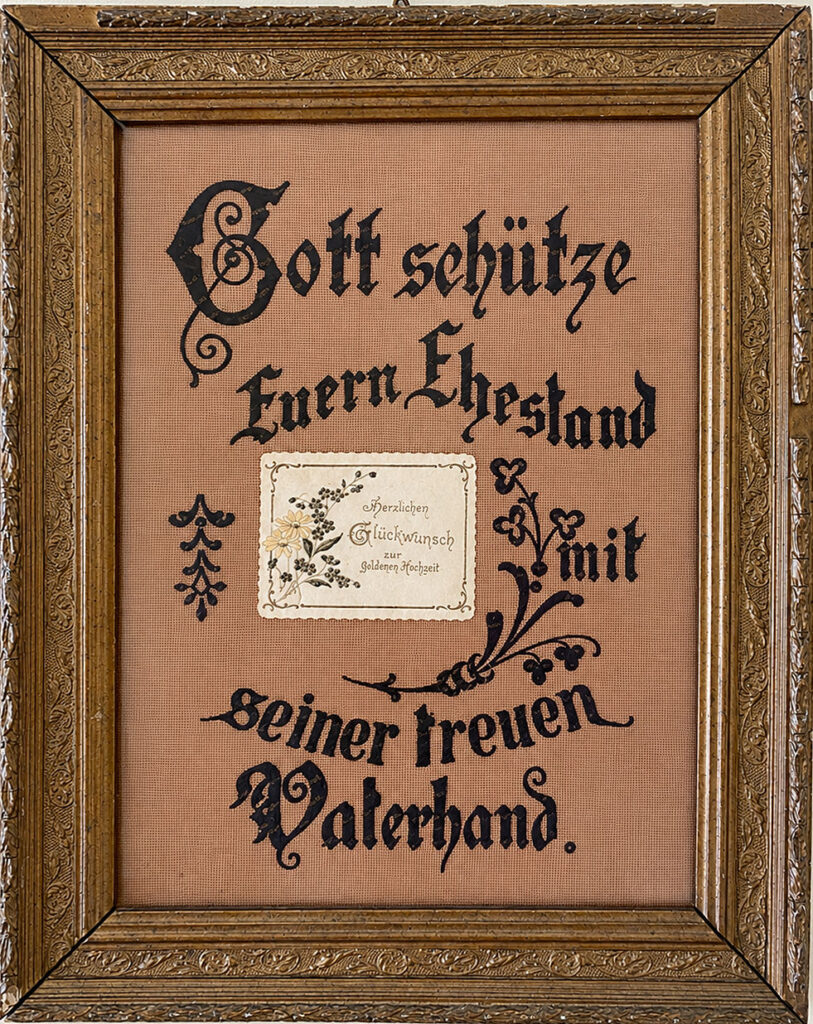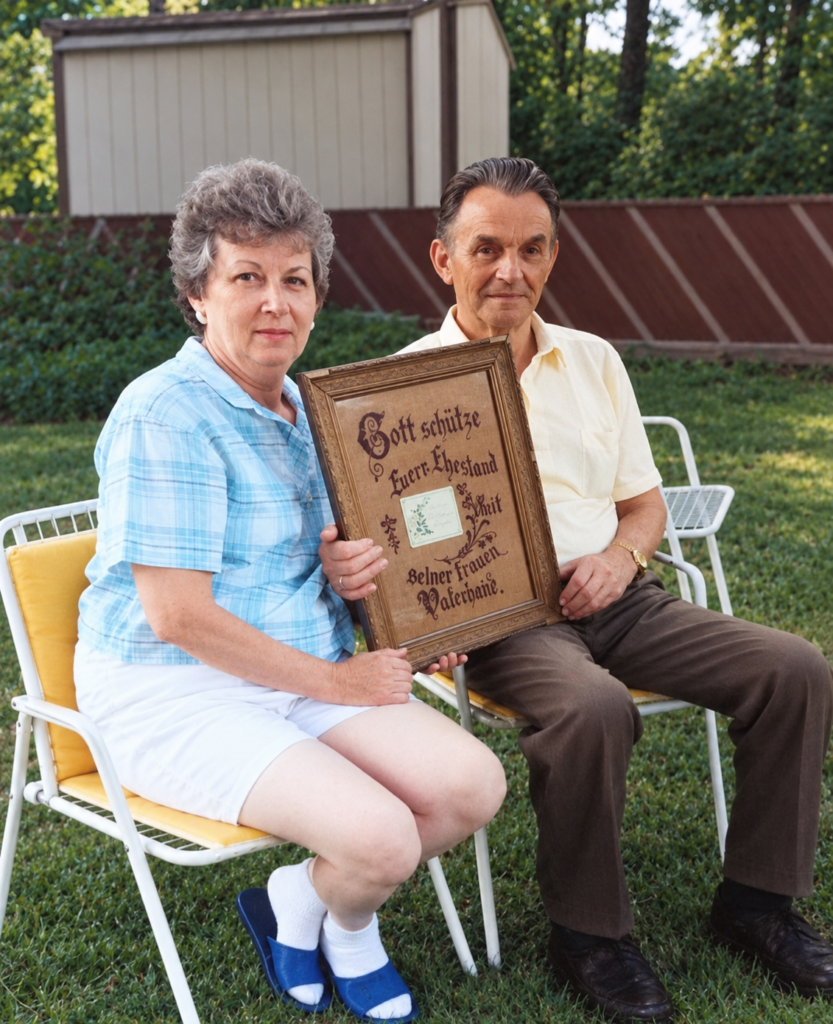
Gerd Jacobs Klover was born August 18. 1833 in Schwerinsdorf, Ostfriesland, married Anna Margaretha Janssen Thomssen on January 7, 1855 in Hesel, and passed away on February 23, 1912 in Lammertsfehn. Gerd’s father was Jacob Gerdes Clover and his mother was Anke Focken Cobus.
Gerd was a worker in Schwerinsdorf and a farmer in Lammertsfehn.
Gerd and Anna had 10 children:
- Jacob Gerdes Klover (born July 29, 1855; married Harmkemina Moderina Strathmann October 21, 1876)
- Jann Gerdes Klover (born February 9, 1858, married Emma Amalie Buttner in 1881; second wife Maria Friederike Stratmann)
- Antke Mena Klover (born May 26, 1860; married Harm Gronewald October 23, 1880)
- Antje Lina Klover (born December 18, 1862; married Julius Buttner; died January 12, 1937)
- Gerhardt Klover (born January 8, 1865)
- Gretje Klover (born February 10, 1869, married Johann Weerts de Riese in 1889; second husband Hermann Meijer; died September 7, 1935)
- Margaretha Klover (born May 20, 1870; married Reinhard de Buhr April 9, 1892)
- Focke Klover (born April 25, 1872)
- Lena Klover (born October 9, 1874; married Boelke de Vries May 12, 1900)
- Harm Klover (born August 30, 1876, passed away December 25, 1878)